Is Your Child's Picky Eating Actually an Airway Problem?
Is Your Child's Picky Eating Actually an Airway Problem?
By Nichole Apperson | Airway & Oral Development Specialist
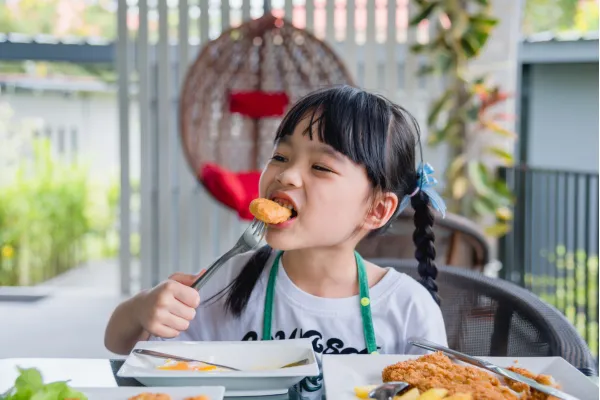
If your child lives on chicken nuggets, mac and cheese, and applesauce pouches — and absolutely refuses anything that requires real chewing — you are not alone.
And you are not a bad parent.
But there is something most pediatricians never connect the dots on:
Picky eating in children is often not a behavior problem. It is an airway problem.
In this post we are going to walk through exactly why that is, what is happening in your child's jaw and airway when they avoid hard foods, and what you can actually do about it — starting today.
Because the food battle you are exhausted from fighting may have a root cause that nobody has told you about yet.
Why Your Child Only Eats Soft Foods — And What It's Doing to Their Jaw, Airway, and Sleep
Your child only eats chicken nuggets.
Mac and cheese. Applesauce pouches. Smoothies. Yogurt.
Anything that requires actual chewing? Hard pass.
You've tried. You've offered vegetables. Whole apples. Meat they actually have to bite into.
They refuse.
And honestly? You're exhausted from the food battles.
So nuggets it is.
Here's what I want you to know first:
You are not a bad parent.
But there is something happening with soft food that most parents — and most pediatricians — never connect.
And it is affecting your child's jaw development, airway health, and sleep quality right now.
"Kids These Days Have So Many Problems" — Your Grandmother Was Right
Your grandmother keeps saying it.
"We never had these issues when you were little."
And she is right.
When we were kids:
ADHD was rare
Most children didn't need braces
Sleep apnea in children was almost unheard of
Behavioral problems were not epidemic
Picky eating was not the norm
So what changed?
The food got soft.
And soft food changed the way our children's jaws — and airways — develop.
What Babies Used to Eat (And Why It Mattered for Jaw Development)
For thousands of years, babies transitioned to hard food around 6 to 9 months old.
Meat on the bone. Crusty bread they had to tear. Raw vegetables they had to gnaw.
Food that required real chewing.
Their jaw muscles worked.
And when jaw muscles work — jaws grow.
Wide jaws = straight teeth
Wide jaws = bigger airway
Wide jaws = healthier sleep
This is how human jaws developed for millennia.
Then we invented baby food.
How Soft Food Affects Jaw Development in Children
Purees. Pouches. Mush. Zero chewing required.
And it did not stop there.
Chicken nuggets. Mac and cheese. Smoothies. Squeeze pouches. Pre-cut everything.
Our children barely chew anymore.
Their jaw muscles are underworked.
And when muscles do not work — bones do not grow.
Here is the direct chain:
Weak muscles → small jaws → narrow airway → mouth breathing → poor sleep → behavior struggles
All connected. All starting with soft food.
The Science Behind It: How Muscles Shape Jaw Bones
Here is something most parents never learn:
Between muscles and bones — muscles always win.
The tongue is one of the strongest muscles in the body.
When babies and toddlers chew hard food, their jaw muscles work. That muscle activity sends a direct signal to the bones:
Grow.
The upper jaw grows wider — creating more nasal space and room to breathe
The lower jaw grows forward — creating more room for the tongue and a bigger airway
When food is soft, those muscles barely engage.
The bones never get the signal.
The jaws stay small and narrow.
And small, narrow jaws create a cascade of problems that most parents spend years trying to solve separately.

What Narrow Jaws Actually Create in Children
When jaw development is compromised, here is what follows:
Narrow nasal cavity — difficulty breathing through the nose
Low tongue posture — tongue sits low and partially blocks the airway
Crowded teeth — not enough space for permanent teeth to come in straight
Mouth breathing — the only way the body can get enough air
Poor sleep quality — the brain cannot fully rest when breathing is compromised
Forward head posture — the body compensating to open the airway
These are not separate problems.
They are one problem with many symptoms.
And the root is underdeveloped jaws from weak, underworked muscles.
Why Picky Eating Is Often an Airway Problem — Not a Behavior Problem
Here is what surprises most parents:
Picky eating is not always behavioral.
When a child's airway is already narrow and breathing is compromised, coordinating chewing, swallowing, AND breathing at the same time is genuinely difficult.
Soft foods require almost no chewing.
They can be swallowed quickly.
Which means the child can get back to breathing faster.
So children default to soft foods — not because they are being difficult — but because eating hard food is harder when you can't breathe well.
This is why food battles rarely work.
You are not dealing with a behavior problem.
You may be dealing with an airway problem.
Signs Your Child's Jaw May Be Underdeveloped
If your child has been eating mostly soft foods, look for these connected signs:
❌ Crowded baby teeth with no gaps between them
❌ Narrow smile — back teeth don't show when smiling
❌ High, narrow palate — roof of mouth is arched, not flat
❌ Mouth breathing, especially at rest or during sleep
❌ Picky eating — refuses anything chewy or crunchy
❌ Speech issues — certain sounds are difficult to form
❌ Slow eating — takes a very long time to finish meals
❌ Gagging easily on new textures
These are not random.
They are a pattern — and the pattern points to jaw development and airway function.
The Generational Shift That Changed Everything
Previous generations:
Breastfed longer — stronger sucking patterns and oral muscle development
Introduced babies to hard, chewy table food early
No sippy cups or squeeze pouches
Children chewed real food — meat on the bone, crusty bread, raw vegetables
Our generation:
More bottle feeding — different sucking pattern than breast
Pacifiers used longer — affects tongue position and muscle development
Sippy cups — affects swallowing and tongue posture
Pouches — zero chewing required
Everything pre-cut, pre-softened, pre-chewed
The result?
Weaker oral muscles. Smaller jaws. Narrower airways.
Your grandmother saw the shift happening.
She was right.
What You Can Do Right Now to Support Jaw Development
You cannot go back and re-feed your child.
But you can support jaw development starting today.
1. Introduce Harder Foods Gradually
Start challenging those jaw muscles:
Chicken drumsticks and ribs — let them gnaw on the bone
Raw carrots, celery, bell peppers — whole, not pre-cut
Whole apples — not sliced, not applesauce
Crusty bread — not soft white sandwich bread
Beef jerky or dried mango — chewy textures that work the jaw
Do not force it.
Make it a game. Try a "crunchy challenge" at dinner. Let them pick one new chewy food at the store each week. Celebrate every attempt.
Their muscles are weak — chewing will feel hard at first. Be patient with the process.
2. Address Tongue Ties and Oral Restrictions
If your child has a tongue tie or lip tie, they physically cannot chew efficiently.
Signs of a tongue tie include:
Cannot stick tongue out past the lips
Heart-shaped tongue when extended
Difficulty with sounds like L, R, and TH
Refusal of chewy or hard foods
Important: Tie release should always be paired with myofunctional therapy — before and after. Without therapy, old muscle patterns often return and the benefits of the release are limited.
3. Myofunctional Therapy for Children
Myofunctional therapy is physical therapy for the tongue, lips, and face.
It retrains:
Tongue rest posture — up against the roof of the mouth, where it belongs
Oral muscle strength
Nasal breathing patterns
Proper swallowing mechanics
Who benefits most: Children with low tongue posture, mouth breathing, tongue tie, weak oral muscles, or picky eating related to oral motor challenges.
Ages 3 to 12 is the ideal window — while the jaws are actively growing and changes happen more naturally. But myofunctional therapy is beneficial at any age.
4. Nutritional Support for Jaw and Bone Development
Support healthy jaw growth through nutrition:
Bone broth — collagen and minerals for bone growth
Grass-fed meat and organ meats — bioavailable nutrients and minerals
Wild-caught fish — vitamin D, omega-3s, and minerals
Leafy greens — calcium and magnesium
Vitamin D3 + K2 — critical for calcium absorption and bone development
Cell salts that support jaw development:
Calc Phos — bone and jaw development
Calc Fluor — structural integrity
5. Reduce Chronic Inflammation
Chronic inflammation from food sensitivities, gut issues, or environmental toxins affects development at every level.
Support by:
Removing inflammatory foods — sugar, gluten, processed foods
Supporting gut health with probiotics and fermented foods
Addressing known food sensitivities
Less inflammation creates a better environment for development.
The Window of Opportunity: Ages 3–12
Ages 3 to 12 is the ideal window for jaw development support.
The jaws are actively growing. Muscles retrain more easily. Changes happen faster and more naturally.
After age 12?
Jaw expansion is still absolutely possible — with the right appliances and approach. Practitioners have successfully expanded jaws in patients well into their 40s, 50s, and beyond.
Earlier is easier.
But it is never too late to start.
What Changes When You Address the Root Cause
When jaw development and airway function are properly supported:
✅ The jaws grow wider
✅ The airway opens
✅ Breathing improves
✅ Sleep quality improves
✅ Behavior and focus improve
✅ Picky eating often improves as chewing becomes easier
✅ Crowded teeth have more room to come in correctly
One root cause.
Many symptoms resolved
Trust What You Are Already Noticing
If you have been dismissing your child's picky eating as "just a phase" —
If you have been feeling guilty about the nuggets and mac and cheese —
If you have noticed crowded teeth, mouth breathing, or a narrow smile —
Listen to that.
This is not about blame.
It is about understanding what happened so you can address it now.
Soft food changed how our children's jaws develop.
But jaw development can be supported at any age — and the earlier you start, the more natural the process.
Ready to Find Out If Your Child's Airway Is Affected?
If you are seeing signs of narrow jaw development — crowded teeth, mouth breathing, picky eating, poor sleep — let's talk.
📞 Book a FREE 15-Minute Thriving Kids Clarity Call
During this call we will:
Talk through what you are seeing with your child
Discuss jaw development, breathing patterns, and eating habits
Explore whether myofunctional therapy and airway support make sense
Determine if my programs are the right fit for your family
No pressure. Just clarity.
👉 Schedule Your Free Clarity Call
👉 Download the Free Airway Checklist
Frequently Asked Questions About Jaw Development and Soft Food
Can narrow jaw development actually be reversed in children?
During ages 3 to 12, yes — the jaws can be supported to grow wider and more forward through myofunctional therapy, harder foods, and expansion appliances. After age 12, it requires different techniques but is still very much possible.
My child won't eat hard foods. Where do I start?
Start with myofunctional therapy to strengthen the oral muscles. As muscles get stronger, chewing becomes easier. Introduce harder textures gradually — one new food per week. Make it a game, not a battle.
Is it too late if my child is already a teenager?
It is never too late. Ages 3 to 12 is the ideal window because growth happens fastest during those years. But jaw expansion and airway improvement are possible in teens, adults, and beyond. Earlier is easier — but older is still absolutely worth addressing.
What if my child has a tongue tie?
Tongue ties should be released — but always with myofunctional therapy before and after. The therapy prepares the muscles and retrains them following the release. Without therapy, old patterns typically return.
Will introducing harder foods really make a difference?
Yes — especially when combined with myofunctional therapy, addressing any oral restrictions, and reducing inflammation. Harder foods alone help, but the best results come from a comprehensive approach that addresses the root cause.
Nichole Apperson is a Traditional Naturopathic Practitioner and Airway & Oral Development Specialist. She works with families nationwide via virtual consultation to identify airway dysfunction in children and provide clarity, direction, and support. Visit nicholeapperson.com to learn more.

